

Understanding Brain Injury Examinations
Neuro-optometric examinations e.g. following concussion or other brain injury, include the usual components of an eye examination:
- Measurement of vision, unaided and with any current glasses or contact lenses
- Eye health checks, including pupil reactions and peripheral vision
- Refraction to determine the prescription for glasses if needed
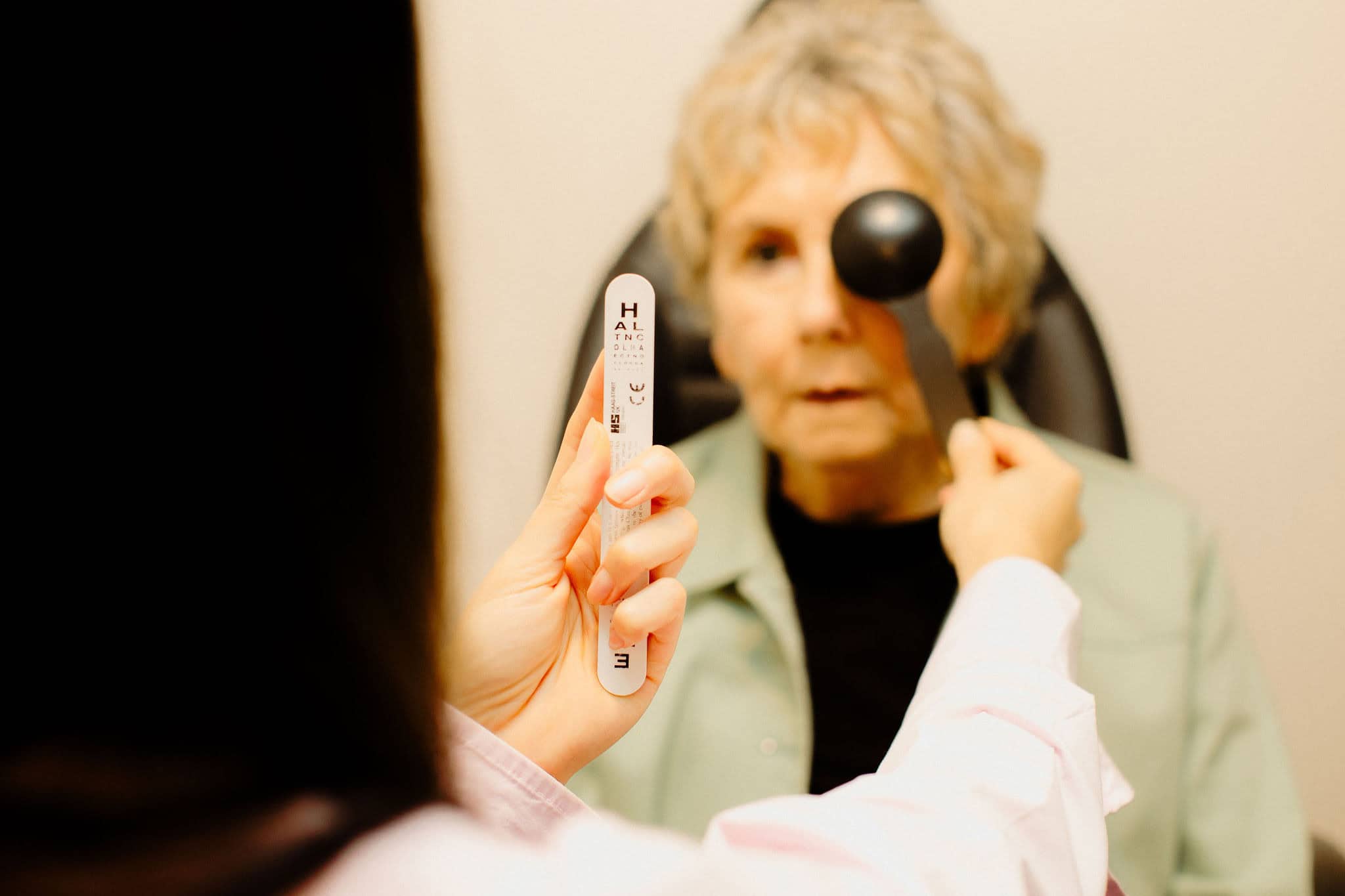
What are Brain Injury Examinations?
Neuro-optometric examinations e.g. following concussion or other brain injury, include the usual components of an eye examination:
- Measurement of vision, unaided and with any current glasses or contact lenses
- Eye health checks, including pupil reactions and peripheral vision
- Refraction to determine the prescription for glasses if needed
In addition, the following components of vision are often impacted after a brain injury and need to be thoroughly assessed:
- Eye movements
- Accommodation (focussing at near)
- Vergence (convergence and divergence, including the near point of convergence)
- Stereopsis (depth perception)
- Visual Motion Sensitivity (sensitivity to movement in the peripheral vision)
- Vestibular Ocular Reflex (the link between the vestibular system and eye movements)
- Abnormal Egocentric Location (a shift of the visual midline)
- Pattern Glare (highly correlated with light sensitivity)
- Any improvement in function with coloured filters or low powered prisms
Treatment and How We Can Help
What we are looking for is if we can prescribe any glasses to ease symptoms and enable return to work and other activities or allow better perception of where things are in space. Often, we will want to include coloured filters or prisms in these glasses. Progressive lenses are not recommended following a brain injury as the peripheral blur can exacerbate symptoms, so we are usually looking at separate distance and near glasses.
For many common conditions following concussion e.g. Visual motion sensitivity, Vestibular Ocular Reflex dysfunction, and issues with eye movements are only able to be improved with a course of in-office vision therapy. Convergence insufficiency and accommodation dysfunctions may be partially improved with glasses but may also require vision therapy for full resolution of symptoms.