
Myopia Control
Long gone are the days where optometrists would prescribe myopic children glasses and hope for the best.
Myopia control refers to evidence-based treatments that aim to slow down the lengthening of the eye, and therefore slow down the progression of myopia.
While these treatment options don’t cure or reverse existing myopia, they significantly reduce the rate at which myopia progresses and lower the risk of certain eye diseases. This also means less money spent on constantly updating spectacles.
Why is Myopia a problem?
Myopia doesn’t only cause blurred distance vision. As the eye lengthens in moderate/high myopia, it drastically increases the risk of eye diseases such as glaucoma, myopic maculopathy, and retinal detachment increases significantly. While the blurry vision can be corrected with glasses, contact lenses or surgery, these treatments do not reverse the stretching of the eyeball which can sometimes lead to permanent vision loss.
What causes Myopia?
The exact cause of myopia is not fully understood, but there are certain risk factors:
Family History - children are around three times more likely to develop myopia if one parent is myopic, and up to six times more likely if both parents are myopic.
Ethnicity - research suggests a link between Asian ethnicity and faster progression of myopia, and overall higher prevalence.
Close work, reading, computer use, drawing, or using phones/tablets during childhood.
Lack of outdoors time - Insufficient exposure to natural light (in particular red light) can lead to elongation of the eye and myopia development.
Visual habits
One of the simplest things that every child can do is to form good visual habits. These include:
Outdoors time - Ideally at least two hours of outdoors time daily. Natural light and distance focus slows down the growth of the eye
Limiting near work outside of school - Avoiding excessive time spent on phones, tablets, laptops, books etc.
Taking regular breaks from near work - Follow the 20/20/20 rule: Every 20 minutes of near work, focus on an object at least 20 feet (6m) in the distance for 20 seconds
Personalised Options to Control Myopia Progression
Myopia prevention is best discussed with your optometrist. Our optometrists can discuss options with you and determine which will be best for your child. All the treatments discussed here are available at Canon Street Optometrists.

MiYoSmart IQ Spectacle Lenses
Elevated with D.I.M.S Technology.
MiYoSmart lenses are an innovative spectacle lens design for myopia control developed by Hoya. MiyoSmart lenses with D.I.M.S technology work to curb myopia progression on average by 60%.
MiYoSmart lenses are an evidence-based solution for myopia management. Your child’s quality of life can be improved by slowing down the progression of their myopia and its associated eyesight deterioration.
A non-invasive solution that corrects myopic refractive error and at the same time effectively slows down myopia progression by 60%.
Decreases axial elongation on average by 60% compared with those children wearing single vision lenses.
The importance of getting a perfect frame fit for children so they are lined up with the clear zone is paramount. Don’t ever hesitate to come into the practice to have a frame refitted and put back into alignment.
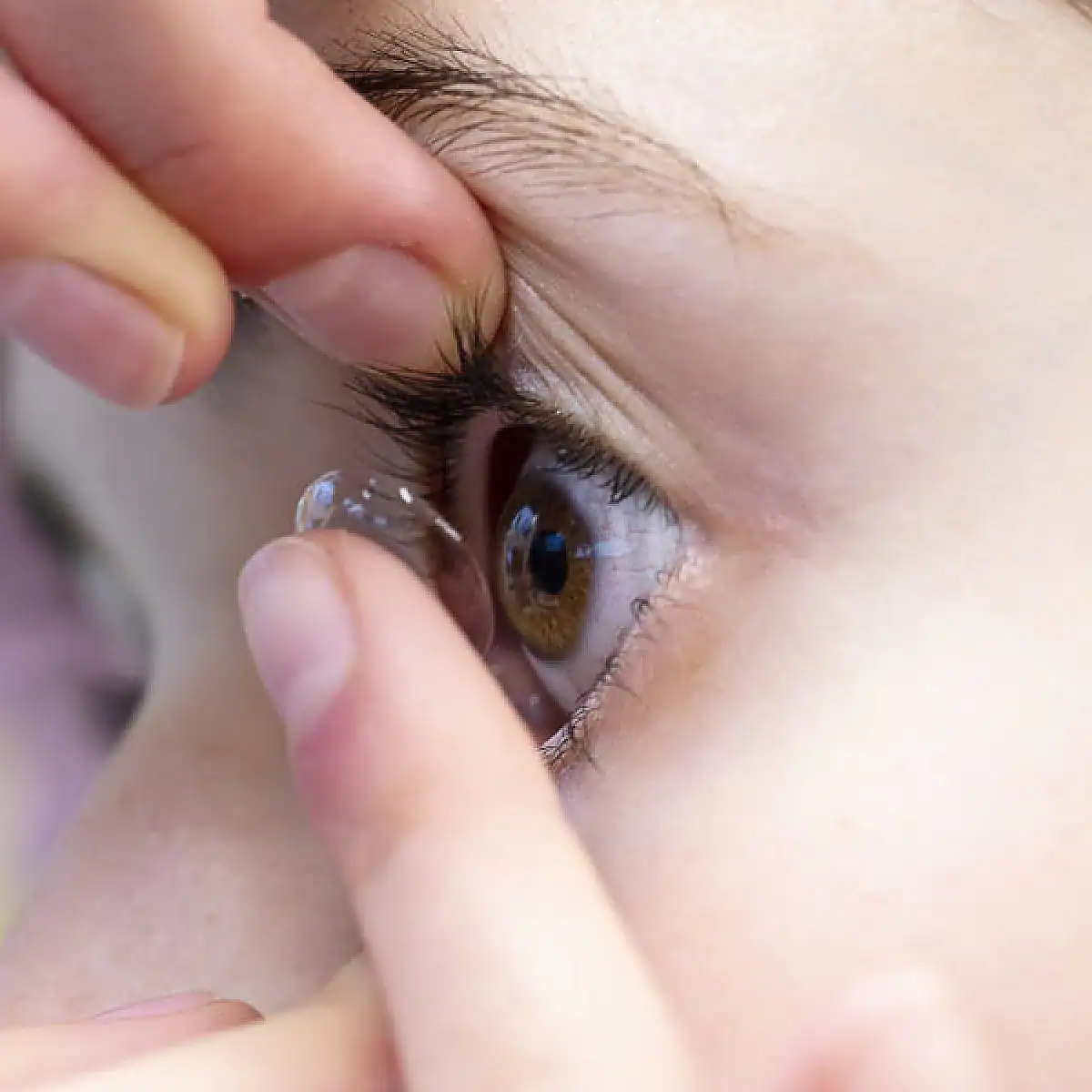
MiSight DailyTM disposable contact lenses
MiSightTM contact lenses are a soft, daily, disposable lens which not only optically correct existing myopia, giving clear distance and near vision, but have also been proven to slow the progression of myopia in most children. The optics of these lenses provide peripheral defocus which is what slows myopia progressing. Daily disposable lenses mean there’s no cleaning, disinfection, or worrying about lost lenses. The lenses are designed to provide high oxygen transmission for healthy, comfortable wear all day long.
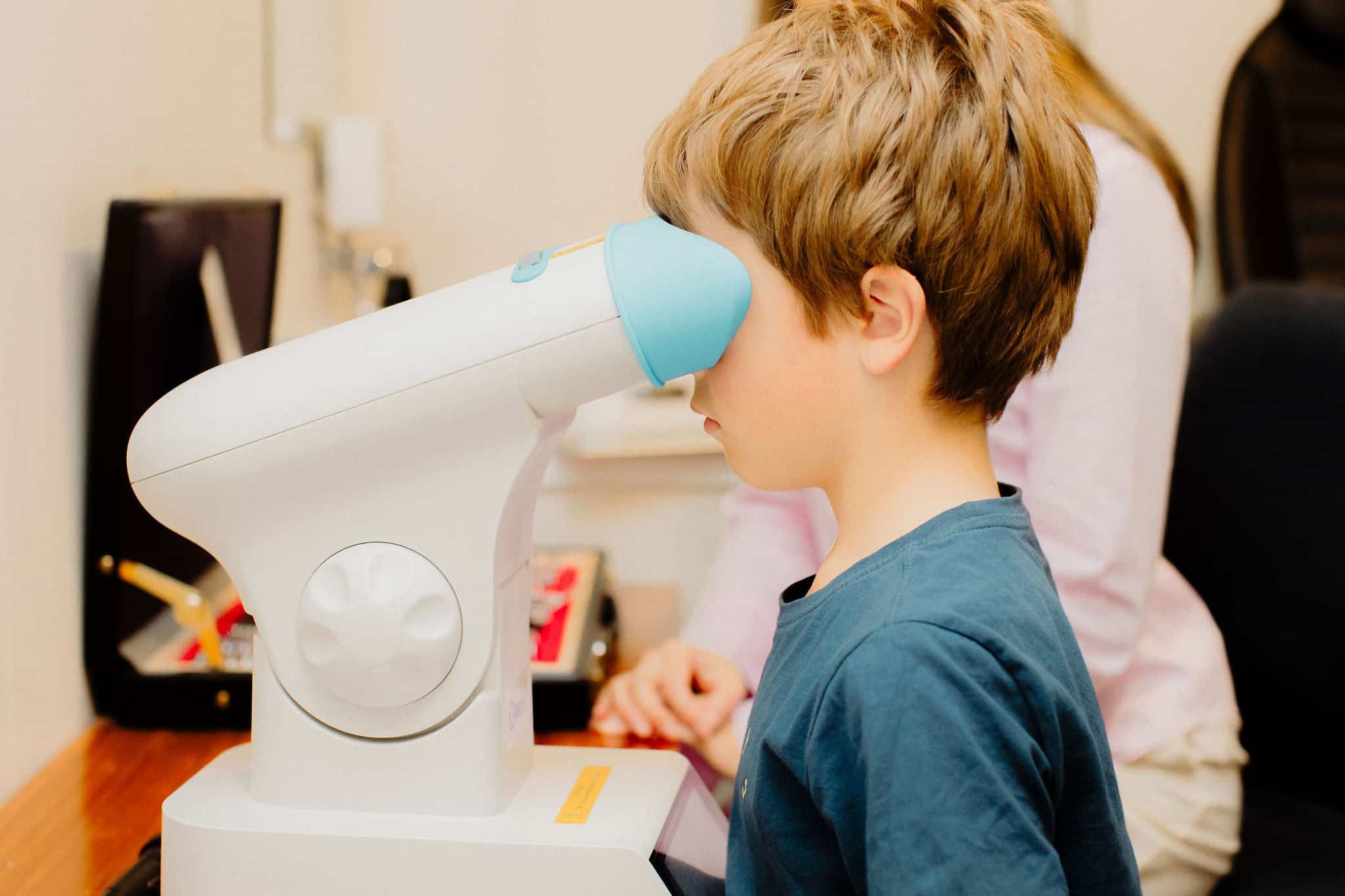
Red Light Therapy
Eyerising International’s commitment to leading the fight against childhood myopia led to the development of our patented Repeated Low-Level Red-Light (RLRL) therapy, a highly effective and child-friendly way to slow the progression of myopia.
Designed to be easy to use at home, the device is noninvasive; can be used without additional medications, eyedrops, or contact lenses; is free of any known significant side effects; and is suitable for use by children as young as 3 and up to 16.
Therapy involves looking into the device for 3 minutes treatment, 2 times per day, 5 days per week, with a minimum of 4 hours between sessions. The device is controlled with a simple touchscreen and tracks each child’s use, sharing the information with the optometrist.
Outdoor play
Time outdoors is associated with reduced myopia progression. It’s not clear how this works, but it may be that ultraviolet light causes changes in the wall of the eye. The recommended time is two hours per day of outdoor play. This is relatively easy for children who walk, bike, or scooter to and from school, and who are outside during playtimes.
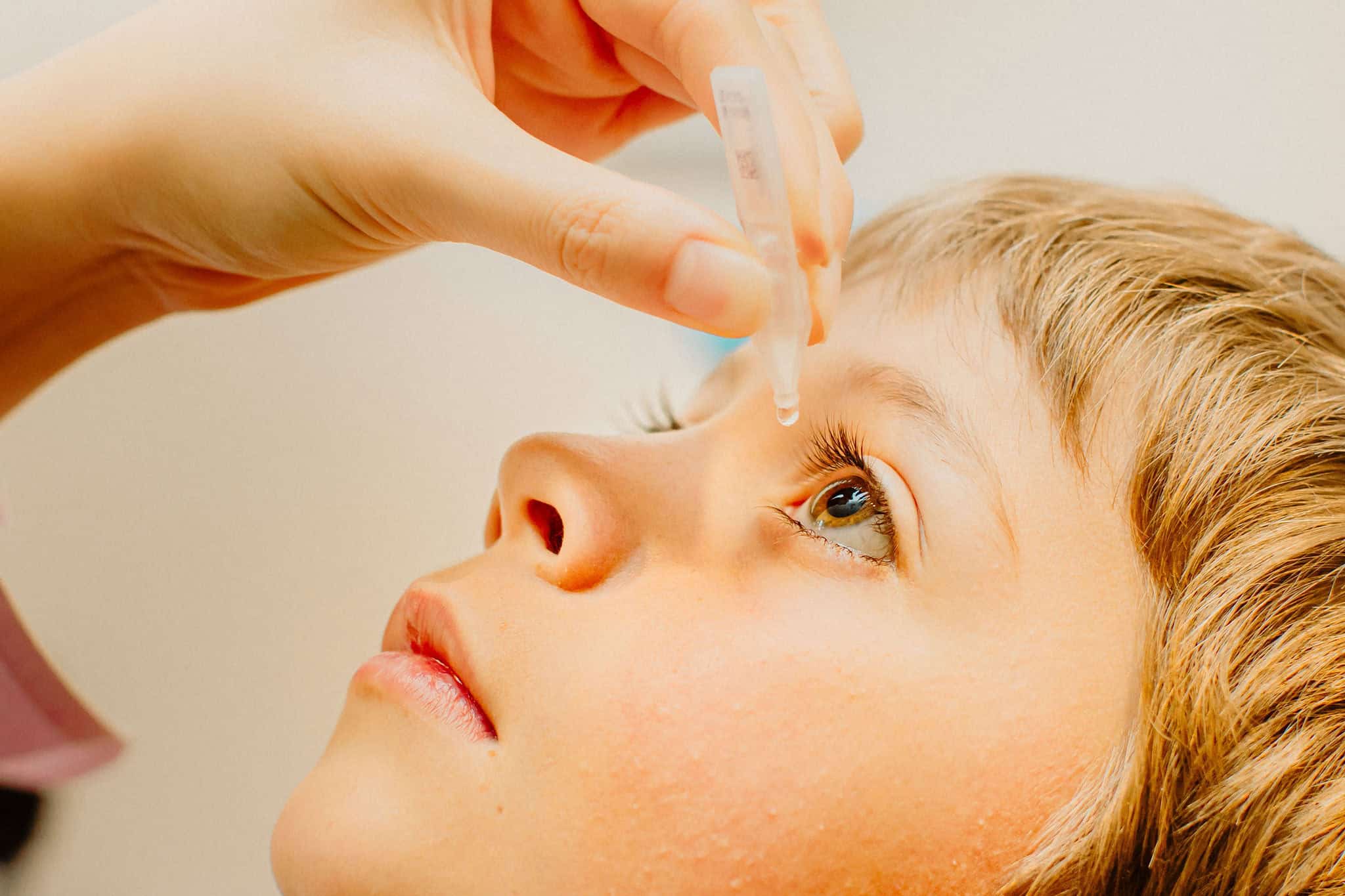
Atropine
Atropine eye drops, which are used to treat other eye problems, slow the progression of myopia. However, how they work is unknown and most children find the side effects of standard doses unacceptable. Recent research has shown that much lower concentrations can reduce the rate of myopia progression with minimal side effects. Low-dose atropine is now widely used to prevent myopia and requires a minimal treatment period of two-years. Your optometrist can write a prescription for low dose atropine to be picked up at your usual pharmacy, however the drops are currently not funded. Optical correction with glasses is still required while using atropine drops.
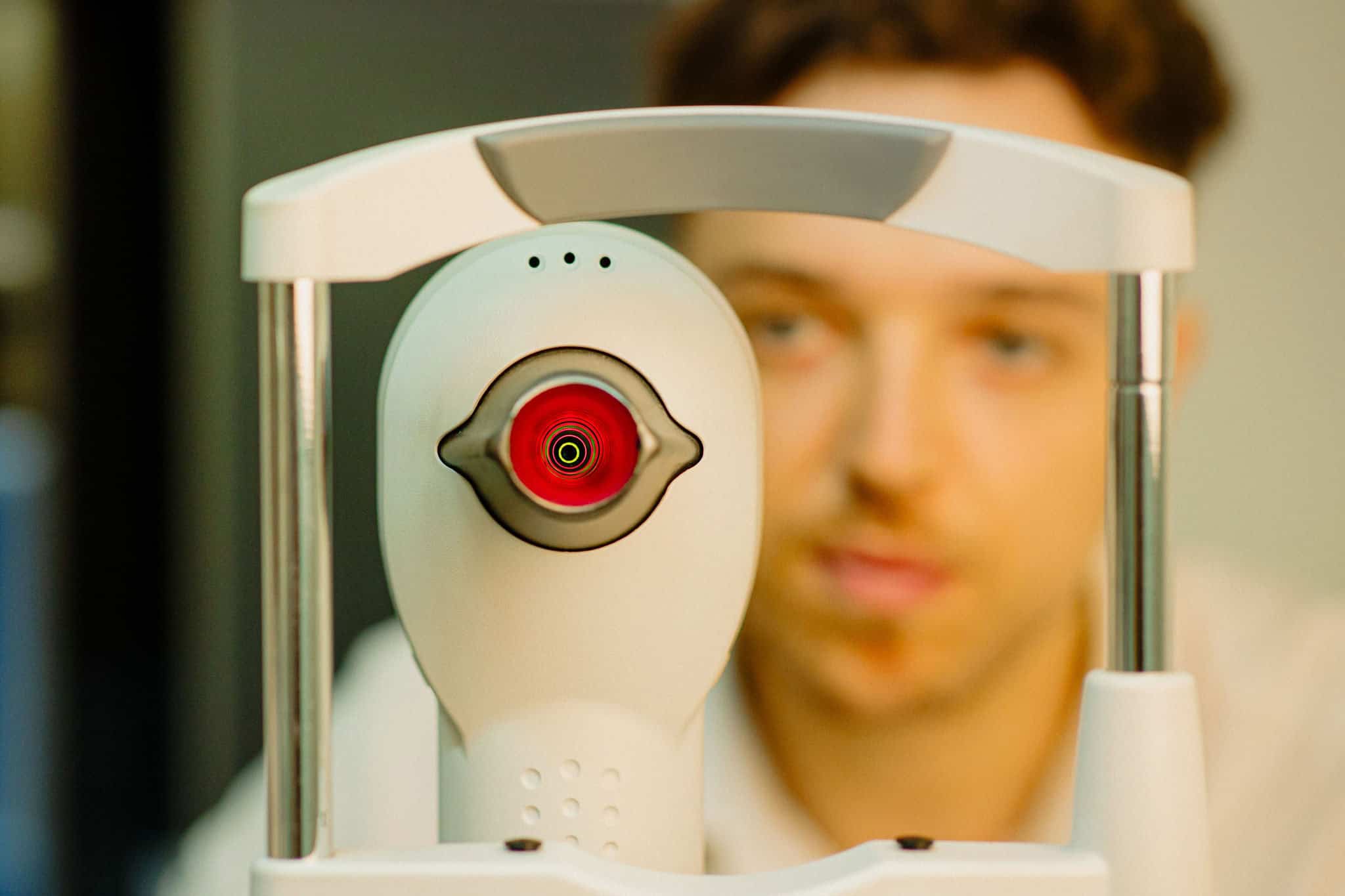
Orthokeratology (Ortho K)
With Ortho K, specially designed rigid contact lenses are worn overnight to mould the shape of the cornea. The moulding changes the way light is focused onto the retina to provide visual correction. In the morning, when the lenses are removed, children have good vision throughout the day. The altered focus of peripheral light seems to stop myopia progressing. The bonus is that no glasses or contact lenses are required during the day so there are no interruptions to school and daily activities.
What are the risks of treatment?
Contact lens wear and atropine treatment can have potential side effects. These are rare but need to be considered. It’s not yet known what will happen when preventative treatment stops, and myopia may still develop later in life. Nevertheless, due to the problems associated with myopia, most optometrists and ophthalmologists recommend treatment.
Treatment will need to continue until the chance of myopia progression has ceased. Most children will need treatment until they stop growing.